
Cumberland County Probate Court
North Carolina probate is handled by the Clerk of Superior Court as Ex Officio Judge of Probate. Cumberland County does not have a separate probate court. Estate filings, wills after death, guardianships, and many special proceedings route through the Clerk of Superior Court at the Judge E. Maurice Braswell Cumberland County Courthouse. That title matters because the clerk is both the court-record custodian and the judicial officer for many estate administration steps.
The official court structure map places Cumberland County in a unified state court system. The same courthouse houses Superior Court, District Court, magistrate access, family court functions, and the clerk's office. Probate matters are therefore local court records, but they are not a county agency file and are not held by the Register of Deeds. Start with the Clerk of Superior Court when a Cumberland County probate record must be viewed, copied, or certified.
Clerk of Superior Court as Ex Officio Judge of Probate
Judge E. Maurice Braswell Cumberland County Courthouse
117 Dick St., Fayetteville, NC 28301
910-475-3000
Monday-Friday, 8:00 AM-5:00 PM
Mail: PO Box 363, Fayetteville, NC 28302
Cumberland Estate Filing Basics
The Judicial Branch estates guidance says estate administration is generally opened in the county where a North Carolina resident was domiciled at death. For a Cumberland County decedent, the person seeking authority should contact or visit the Clerk of Superior Court and bring the will if one exists, a certified death certificate, the application and preliminary inventory, and the filing fee. The clerk determines whether letters testamentary or letters of administration may issue to a qualified person.
A typical estate path starts with domicile, then moves to the will, death certificate, AOC estate forms, preliminary inventory, filing fees, letters, notices, inventory, claims, accountings, distribution, and closing entries. That process creates Cumberland County probate records over time. Some entries are administrative, while others are clerk orders or hearing results. A contested will caveat is different because the validity challenge moves before a Superior Court judge.
- Confirm that the decedent was domiciled in Cumberland County.
- Gather the will if one exists and a certified death certificate.
- Contact or visit the Clerk of Superior Court for the correct estate forms.
- File the application and preliminary inventory with the fee.
- Use the clerk's issued letters and later filings to administer and close the estate.
Cumberland Probate Terms Defined
Probate records use terms that have precise local court meaning. The definitions below keep the common estate words tied to the Cumberland County probate process documented in the research.
- Testator
- A person who made a will.
- Executor
- A person named in a will to carry out estate duties after appointment.
- Intestate
- Dying without a will, which may lead to letters of administration rather than letters testamentary.
- Guardianship
- A clerk or special proceeding matter involving authority over a person, estate, or protected interest.
- Special proceeding
- A court matter such as estates, guardianship, partitions, or certain statutory proceedings.
- Letters testamentary or administration
- Clerk-issued authority for a personal representative to act for an estate.
Search Cumberland Probate Records
Cumberland County probate records may be found through several official access channels. The NC eCourts Portal is the online starting point when estate or special proceeding records are available online. Public self-service terminals in clerk offices provide civil, special proceeding, and estates case information. Paper estate files, wills, certified probate documents, and older materials should be requested through the Cumberland Clerk of Superior Court.
Use the statewide Current Court Costs publications for estate and special proceeding fee schedules. The Judicial Branch public-record request path is useful for administrative Judicial Branch records, but actual estate court files follow clerk procedures. A court-record request should include the decedent or estate name, file number if known, case type, filing date range, personal representative or applicant name, and the exact document needed.
| Channel | Best Use | Limit |
|---|---|---|
| NC eCourts Portal | Online case information when public and available | Documents and fields vary by case and access level. |
| Clerk public terminal | Estate and special proceeding case information | Full paper files still require clerk office access. |
| Clerk counter | Paper files, wills, certified probate copies | Copy and certificate fees may apply. |
| Public-record request route | Administrative Judicial Branch records | Not a substitute for estate court-file procedures. |
Cumberland Probate Fees
The official estate filing fee listed in the research is $120. Clerk copy fees come from the statewide clerk fee statute used across Cumberland County court records. Because the current court-cost PDFs include civil, criminal, estates, special proceedings, and miscellaneous schedules, probate filers should verify any additional estate or special proceeding costs in the current schedule before filing.
| Item | Fee or Note |
|---|---|
| Estate filing fee | $120 listed on Judicial Branch estates page |
| Copy from clerk file | $2 first page, $0.25 each additional page |
| Certificate under seal | $3 |
| Exemplification | $10 |
| Current fee schedules | Use estate, special proceeding, and miscellaneous PDFs last modified Jan. 1, 2026 |
Note: Fees in Cumberland County probate records work can include both filing costs and copy or certification costs.
What Probate Records Show
Cumberland County probate records may include the will and codicils, application for probate or letters, preliminary inventory, letters testamentary or letters of administration, estate inventory, creditor notices and claims, accountings, orders, clerk hearing entries, guardianship petitions and orders, and special proceeding filings such as partition or trust matters. Wills become public records once filed after death.
No full sample Cumberland estate file was captured in the research. Expected visible fields include estate name or decedent, file number, case type, filing date, personal representative or applicant, attorney if public, status, docket events, hearing dates, orders, and available documents if the material is public and digitized. Use the clerk for certified copies when a court, financial institution, or agency requires an official estate document.
Guardianships and Special Proceedings
Guardianships and special proceedings are part of the clerk-centered probate record world in Cumberland County. The research identifies guardianship petitions and orders as common probate documents and special proceeding filings as a category that may include partitions or trust matters. Public self-service terminals may provide civil, special proceeding, and estates case information, while complete files and certified documents remain clerk-office requests.
The abuse, neglect, and dependency confidentiality statute is one source connected to restricted child-related court records.
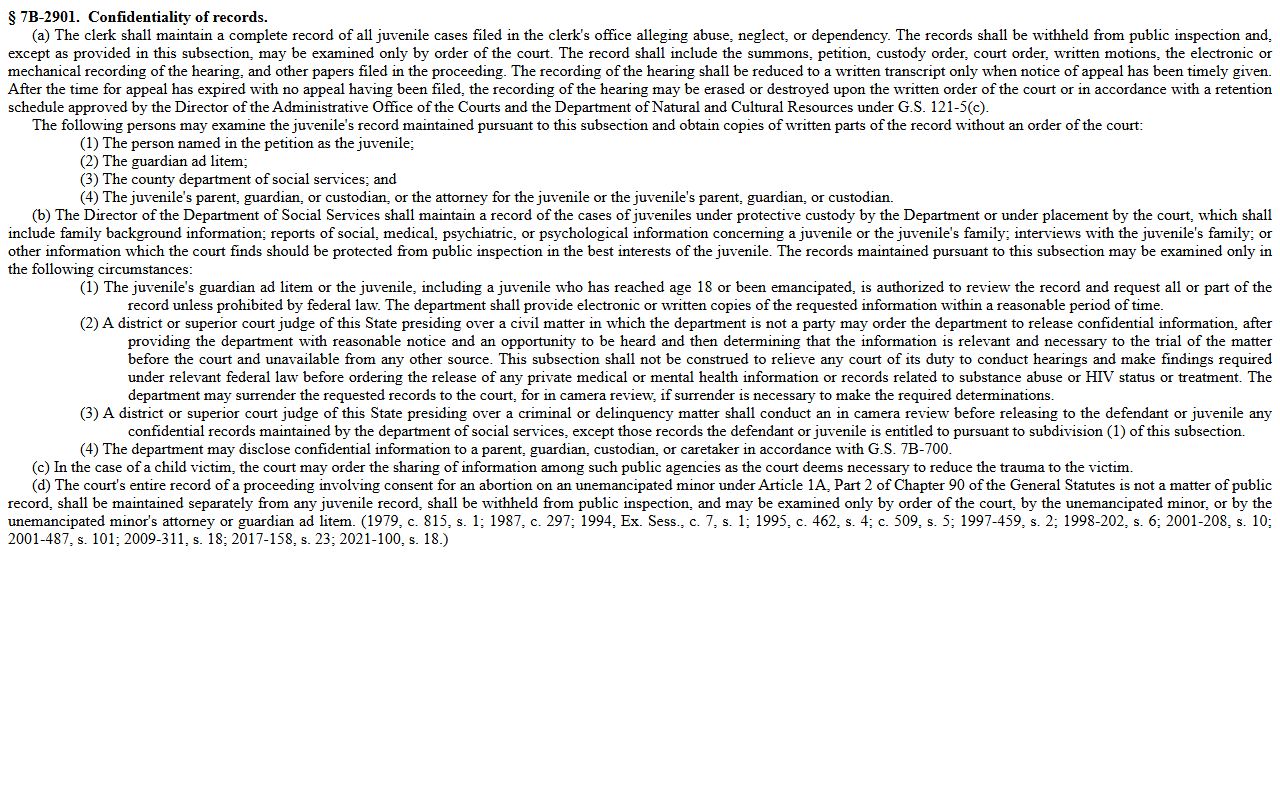
That confidentiality rule helps separate public probate records from protected juvenile or child-welfare court files.
The juvenile record confidentiality statute is another access boundary relevant to guardianship-adjacent research.
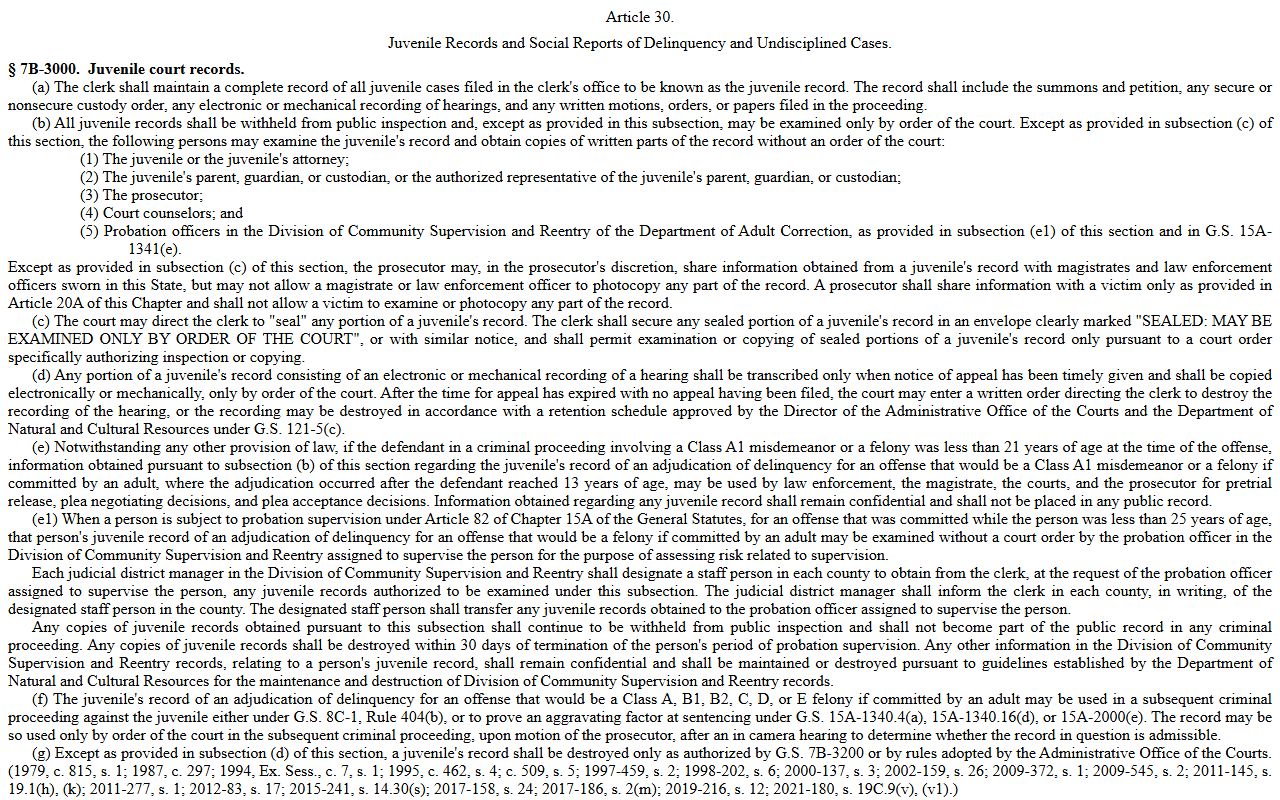
Juvenile confidentiality means a public probate search should not be expected to expose restricted juvenile court information.
Cumberland Probate Caveats
A caveat is a challenge to the validity of a will. The research states that if a will's validity is challenged in a caveat proceeding, the contest is heard by a Superior Court judge rather than decided as an ordinary clerk estate hearing. That makes caveats a key exception to the usual clerk probate path. The file may still begin in the estate setting, but the contested issue moves into Superior Court.
Adoption records are another strict access limit. The research identifies Chapter 48 as the source for adoption confidentiality and sealing rules, except for limited decree or index information and disclosures allowed by adoption law. The adoption confidentiality source is therefore relevant when a records search touches family or child-related court files.
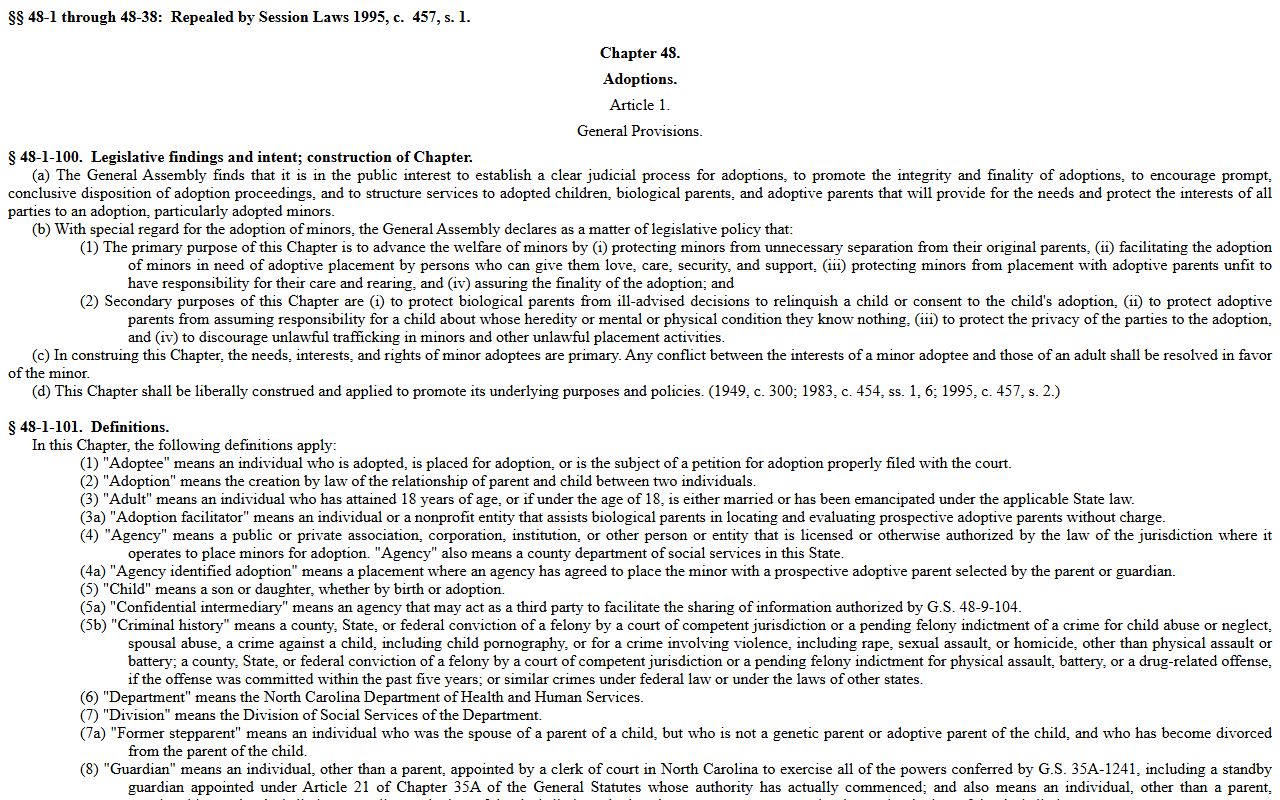
Those limits are why the clerk may provide public estate documents while withholding sealed adoption or juvenile material.