
Cumberland Clerk of Superior Court
Cumberland County uses a unified North Carolina clerk structure. The local court clerk is the Clerk of Superior Court, not a separate district clerk and county clerk pair. The court directory identifies the Clerk of Superior Court phone as 910-475-3000 at the Judge E. Maurice Braswell Cumberland County Courthouse. The county government contact page names Lisa Scales as Clerk of Superior Court and lists the court system address as 117 Dick Street, Fayetteville.
The Clerk of Superior Court is the practical custodian for Cumberland Superior Court and District Court files. Those files include criminal, civil, special proceedings, estates, divorce judgments, traffic and infraction court records, and court-copy requests. The office also receives payments by mail under the Cumberland County payment instructions and provides courthouse access to public terminals and paper files.
Cumberland County Clerk of Superior Court
Clerk: Lisa Scales
Judge E. Maurice Braswell Cumberland County Courthouse
117 Dick St., Fayetteville, NC 28301
910-475-3000
Monday-Friday, 8:00 AM-5:00 PM
Mail: PO Box 363, Fayetteville, NC 28302
Cumberland Court Record Custodian
The statewide Judicial Branch guidance is the main source for Cumberland County Clerk of Superior Court records access. Criminal case information can be accessed from public self-service terminals in any county clerk's office and searched by defendant name, case number, or victim or witness name. Civil, special proceeding, and estates information is also available on public self-service terminals.
Full paper files must be viewed at the clerk's office in the county where the case is located. For local Cumberland County court records, that means the courthouse clerk's office. Staff may provide copies of court documents for a fee. The Judicial Branch also says background checks should be handled through the county clerk's office rather than through the NC eCourts Portal.
- Superior Court and District Court case files.
- Criminal, civil, traffic, estate, and special proceeding records.
- Divorce judgment copies from Cumberland divorce cases.
- Certified copies, certificates under seal, and exemplifications.
- Public terminal access for supported case information.
Cumberland Clerk Terminal Search
The official online channel for many Cumberland court matters is the NC eCourts Portal, which provides case information, hearings, payments, and judgments. Cumberland County went live in eCourts on October 14, 2024 as part of Track 6, bringing File & Serve, Portal, Guide & File, and Enterprise Justice/Odyssey to the county's state-court operations.
Portal access does not replace the clerk's terminals or paper files. Public self-service terminals in a clerk's office provide criminal, civil, special proceeding, and estates case information. For a certified copy, a complete paper file, an older document, a divorce judgment, or a background check, the Cumberland County Clerk of Superior Court remains the access point.
| Search Path | Use It For | Research Limit |
|---|---|---|
| NC eCourts Portal | Online case details, hearings, payments, judgments | Visible detail varies by case type and access level. |
| Public clerk terminal | Criminal, civil, special proceeding, estates case information | Full documents may require the clerk file. |
| Paper file at clerk office | Original local court file review and copies | Must be viewed where the case is located. |
| Certified copy request | Official court copies for legal use | Copy and certificate fees apply. |
Request Certified Court Copies
Certified copies are requested through the Cumberland County Clerk of Superior Court when the source record is a court file. Examples include divorce judgments, estate letters, criminal judgments, civil orders, and traffic or infraction case records. A plain Portal view may help identify the case, but it is not the same thing as a certified clerk copy.
- Find the case number, party names, and court division through Portal, a notice, or the clerk terminal.
- Identify the exact document needed, such as a judgment, order, estate letter, or divorce decree.
- Contact or visit the Cumberland County Clerk of Superior Court because no Cumberland-specific court-record request form was located in official sources.
- Ask whether a plain copy, certificate under seal, or exemplification is required for the receiving agency.
- Pay the copy and certification fees using an accepted local method and confirm pickup or mailing instructions.
The clerk fee statute is the source for copy, certificate, and exemplification charges in Cumberland County Clerk of Superior Court records work.
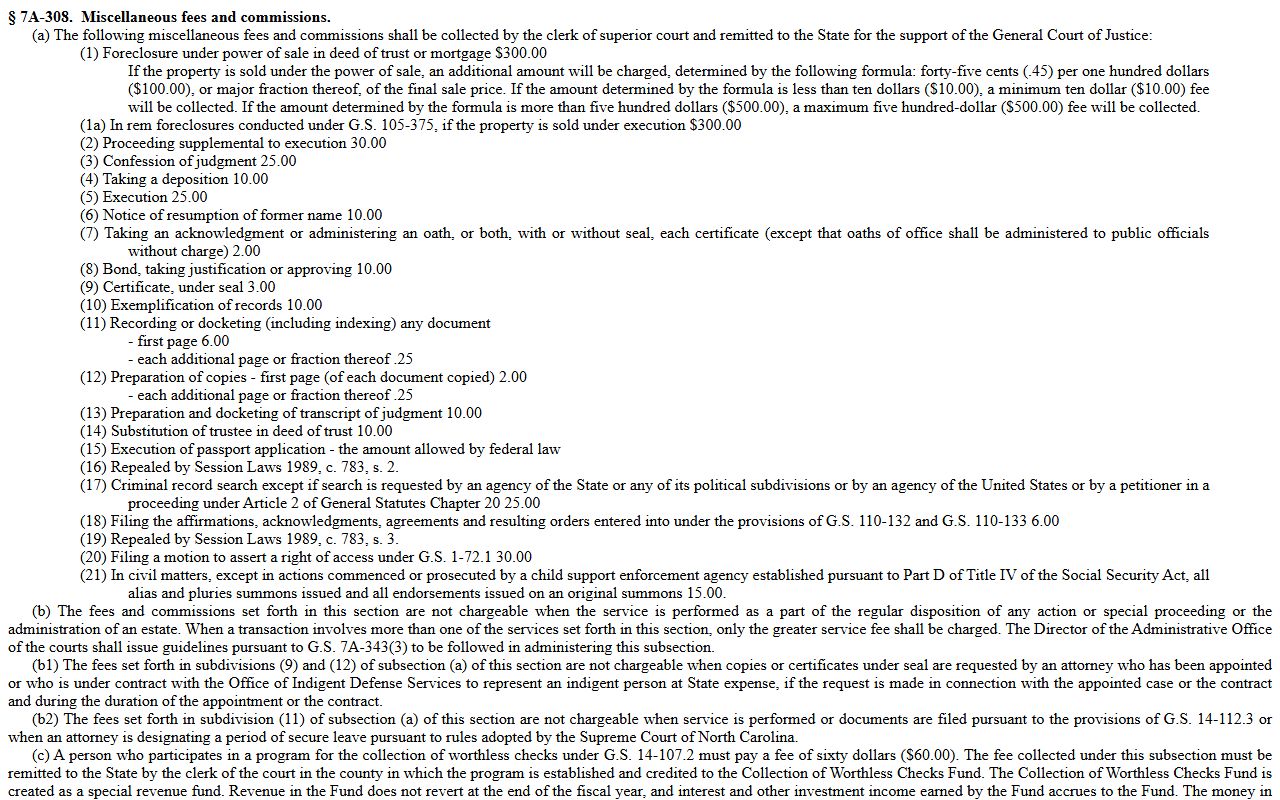
Those fees distinguish an ordinary file copy from a sealed or exemplified court document.
Cumberland Copy Request Details
No Cumberland-specific court-record request form was located in the official research. The Judicial Branch directs court-record seekers to Portal, courthouse terminals, the county clerk's office, or record-type-specific services. A useful Cumberland County Clerk of Superior Court records request therefore should include enough detail for staff to locate the file and price the copy.
| Detail to Provide | Required | Notes |
|---|---|---|
| Case number | Helpful | Use Portal or court notices to locate it when possible. |
| Party names | Yes | Names help locate court records when the number is not known. |
| Case type | Helpful | Criminal, civil, traffic, estate, special proceeding, or divorce. |
| Document type | Yes | Judgment, order, estate letter, decree, or other named filing. |
| Certification need | Yes if needed | State whether plain copy, seal, or exemplification is required. |
| Return method | Helpful | Ask the clerk about pickup or mailing procedures. |
Cumberland County Clerk Fees
Copy and certification fees for the Cumberland County Clerk of Superior Court come from statewide clerk fee law, while broader court costs are published in current Judicial Branch fee schedules. The research source for current court costs states that the PDFs for civil, criminal, estates, special proceedings, and miscellaneous costs were last modified January 1, 2026.
The current court-cost publications provide the broader fee context for Cumberland County Clerk of Superior Court records.
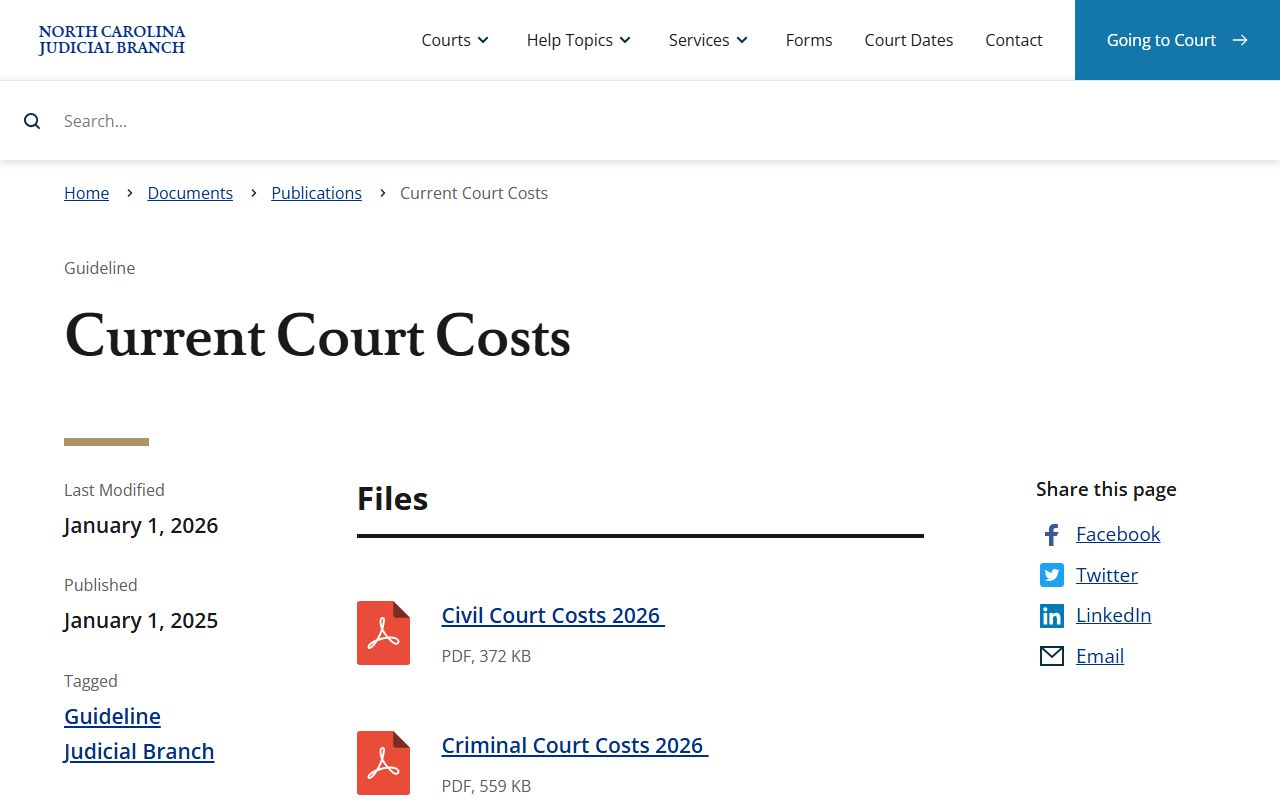
Use the current schedules for filing costs and the clerk copy statute for copy-specific amounts.
| Item | Fee or Note |
|---|---|
| Copy from clerk file | $2 first page, $0.25 each additional page |
| Certificate under seal | $3 |
| Exemplification | $10 |
| Estate filing fee | $120 listed on Judicial Branch estates page |
| Full current court costs | Civil, criminal, estates, special proceedings, and miscellaneous PDFs |
Cumberland Clerk Payments
The Cumberland County payment page says fees, fines, and traffic citations may be paid by mail, in person, or online if eligible. Mail payments must be money order or certified check payable to Cumberland County Clerk of Superior Court and mailed to PO Box 363, Fayetteville, NC 28302. Cash and personal checks are not accepted by mail.
For in-person payment at the courthouse, the research lists cash, credit or debit card with processing fees, money order, or certified check. No personal checks are accepted in person. If a payment is tied to a citation, the citation number should be included when paying by mail. These payment rules support court costs and eligible traffic matters; copy requests should still be confirmed with the clerk because the document type affects the fee.
The court costs overview is the source for general costs and miscellaneous fee guidance.
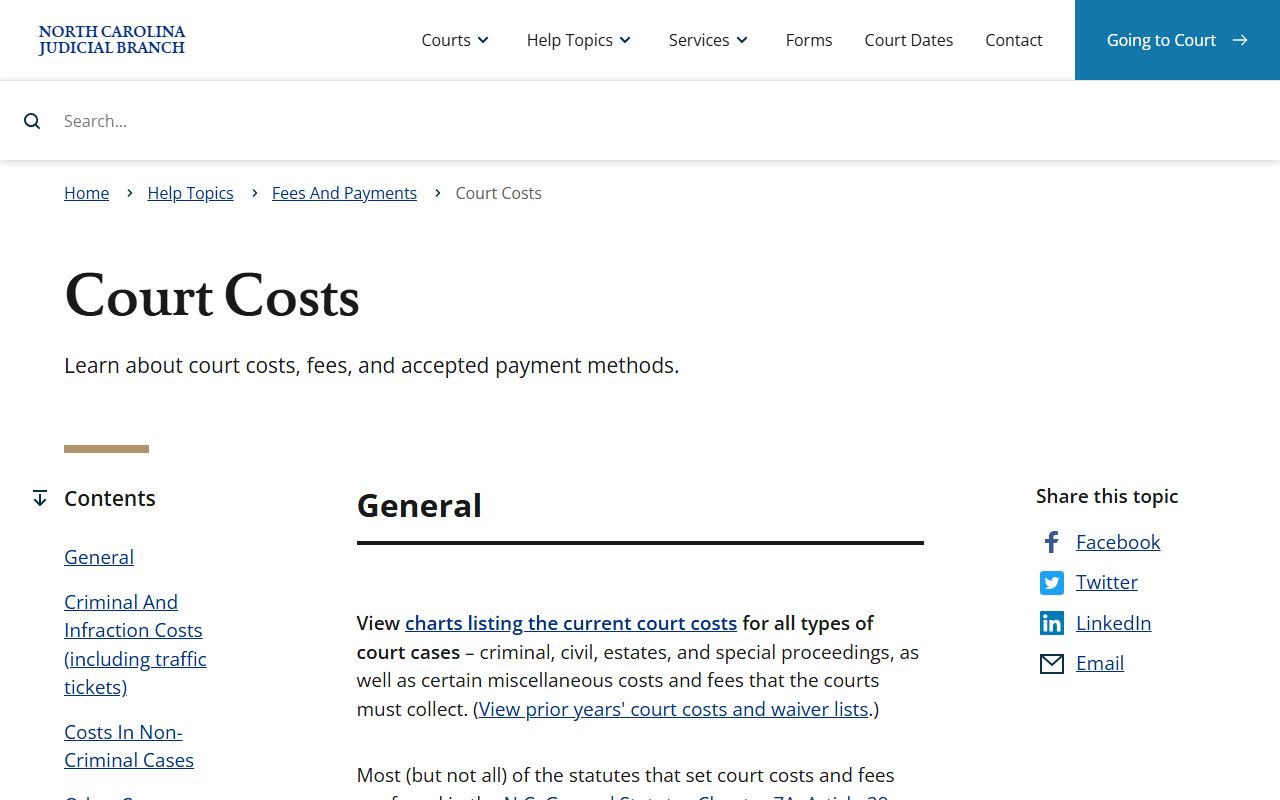
The payment source helps separate court financial obligations from a records search itself.
Clerk Probate Role
The Clerk of Superior Court also serves as North Carolina's probate judge. Judicial Branch materials explain that elected clerks and assistant clerks conduct most estate hearings and probate administration. In Cumberland County, that means estate records, wills filed after death, applications, preliminary inventories, letters testamentary or administration, inventories, accountings, claims, orders, guardianships, and many special proceedings route through the clerk rather than a separate probate court.
Use the probate path when the record concerns a decedent's estate or a clerk special proceeding. Use the ordinary court-record path when the record is a civil, criminal, traffic, or divorce court file. The same office may be involved, but the case type changes the forms, fees, and terminology.
The North Carolina public records definition frames many government records as public unless another law restricts access.
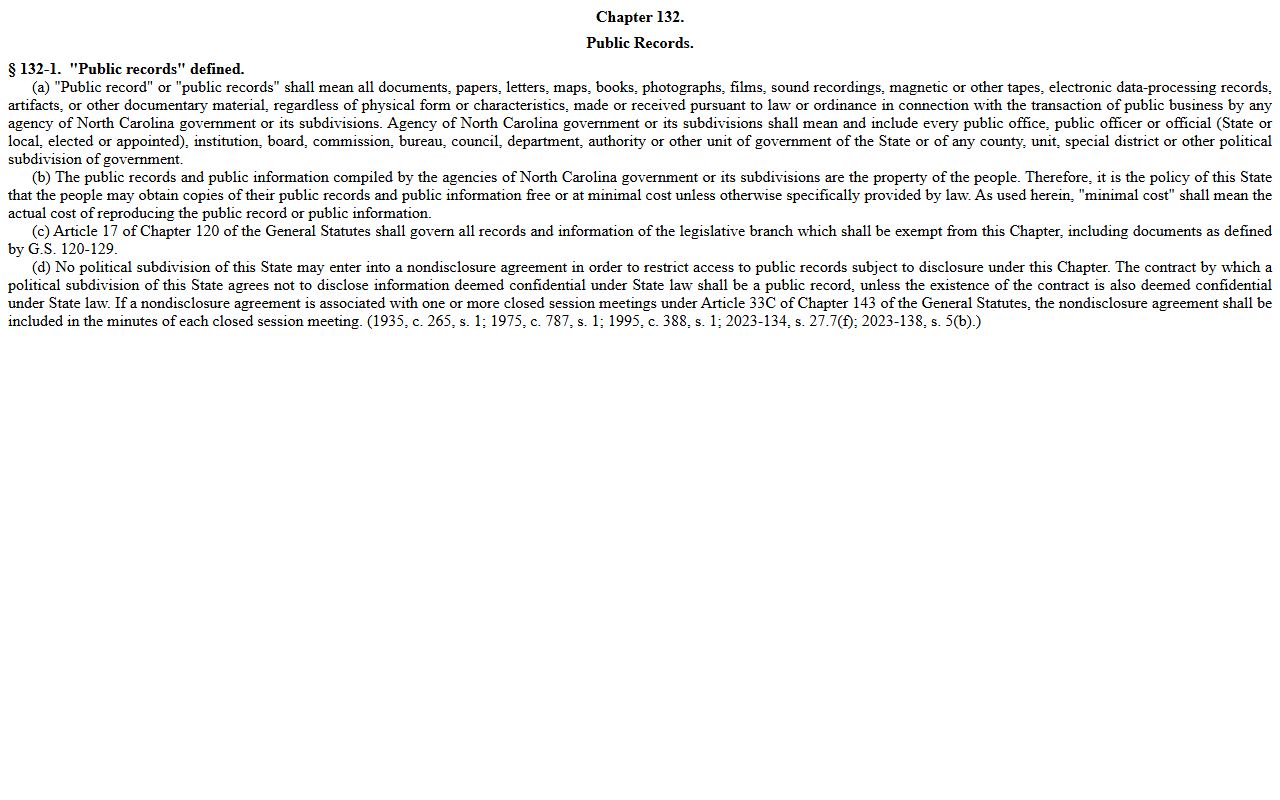
That broad rule is narrowed by court-specific confidentiality limits for juvenile, adoption, sealed, and expunged matters.
Records Not Held by Clerk
Not every Cumberland County public record belongs to the Clerk of Superior Court. Marriage licenses and certified marriage copies are Register of Deeds records. Sheriff incident reports, warrant section questions, detention records, and law-enforcement records go to the Sheriff's Office or the responsible agency. State prison, probation, and parole searches use NC DAC, not the county clerk. NC DMV driver records are separate from court traffic files.
The full North Carolina public records chapter includes public-record rules and criminal-investigation limits that affect agency records outside the clerk's court files.
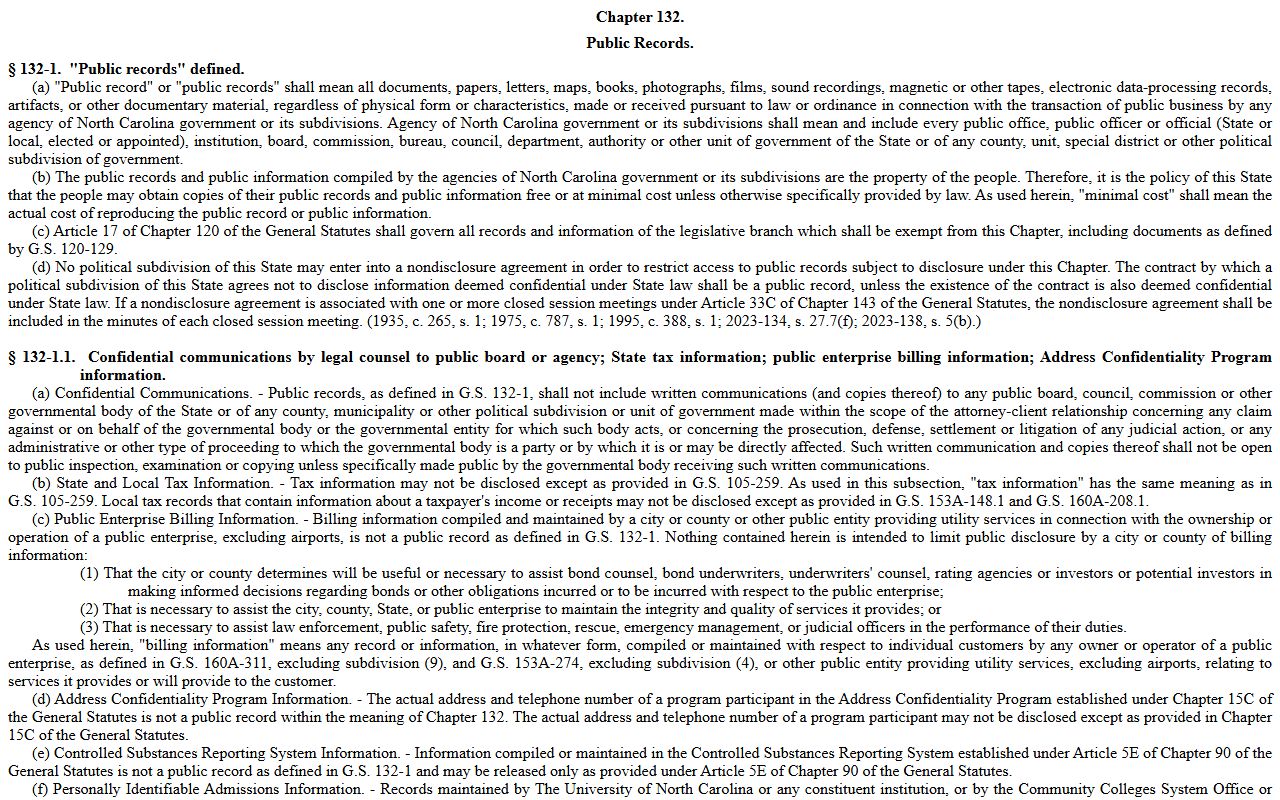
That distinction keeps court-copy requests from being misdirected to the clerk when another custodian holds the record.
Note: For marriage and divorce records, use the Register of Deeds for marriage copies and the Clerk of Superior Court for divorce judgments.